
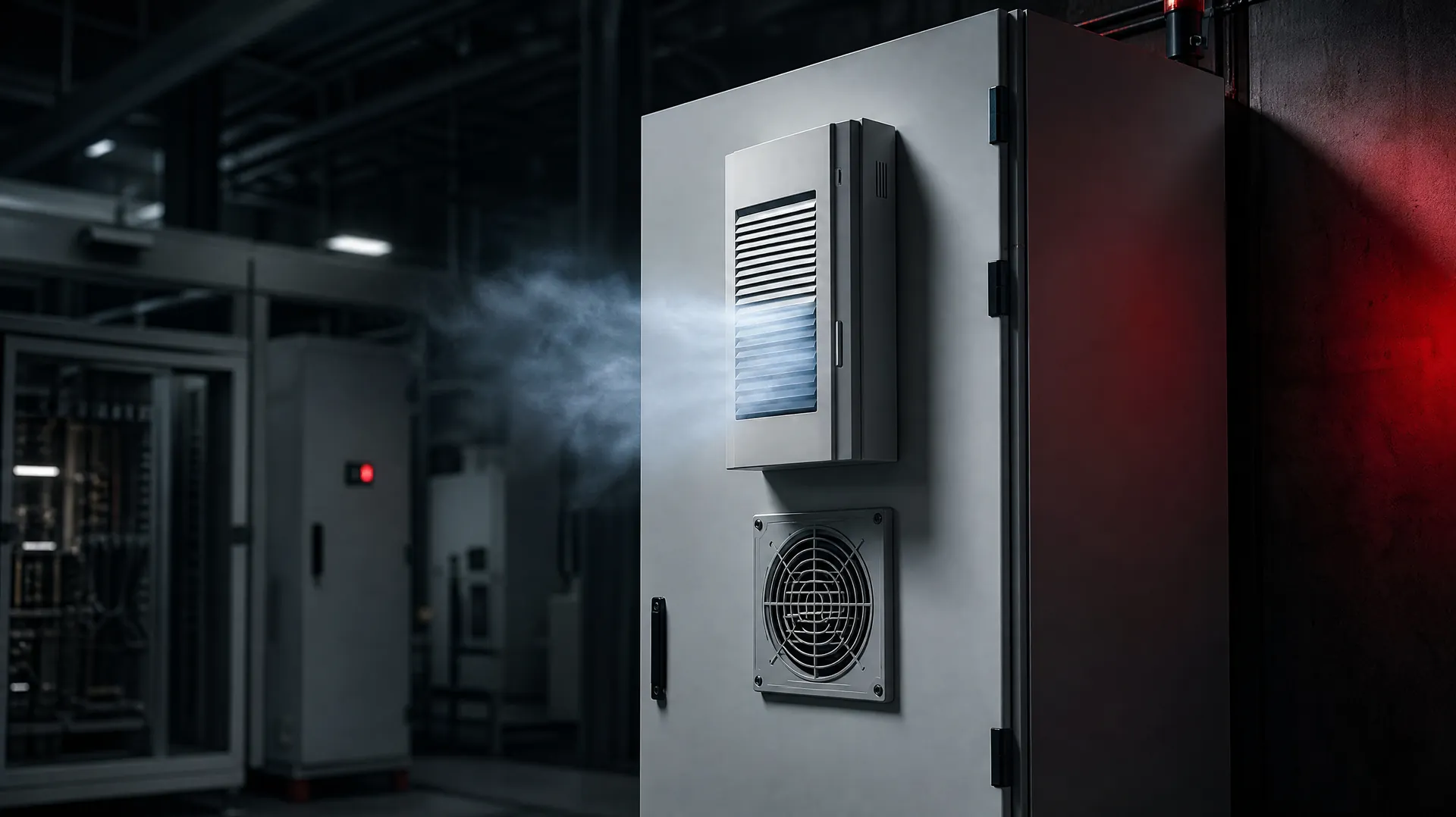
Where heat in an enclosure comes from, the basic heat balance and how to choose the right cooling method, from natural ventilation to air conditioning.
A panel's reliability often depends less on the quality of its devices than on the temperature at which they operate. Heat building up in a closed enclosure quietly shortens component life, causes unexpected failures and increases downtime. Heat management is therefore not a detail added at the end, but part of panel design from the very start.
01 —Why heat matters
Component lifetime is directly linked to temperature. As a rule of thumb, a rise of about 10 °C noticeably shortens the life of many components; for electrolytic capacitors, life is commonly assumed to roughly halve. Drives, power supplies and PLCs are among the most sensitive devices.
Protective devices are affected too. Thermal trip elements respond to ambient temperature, so breakers in a hot enclosure may trip below rated current and cause nuisance outages. Manufacturers publish derating values for high internal temperatures, and these must be considered in design.
02 —Heat sources and the basic heat balance
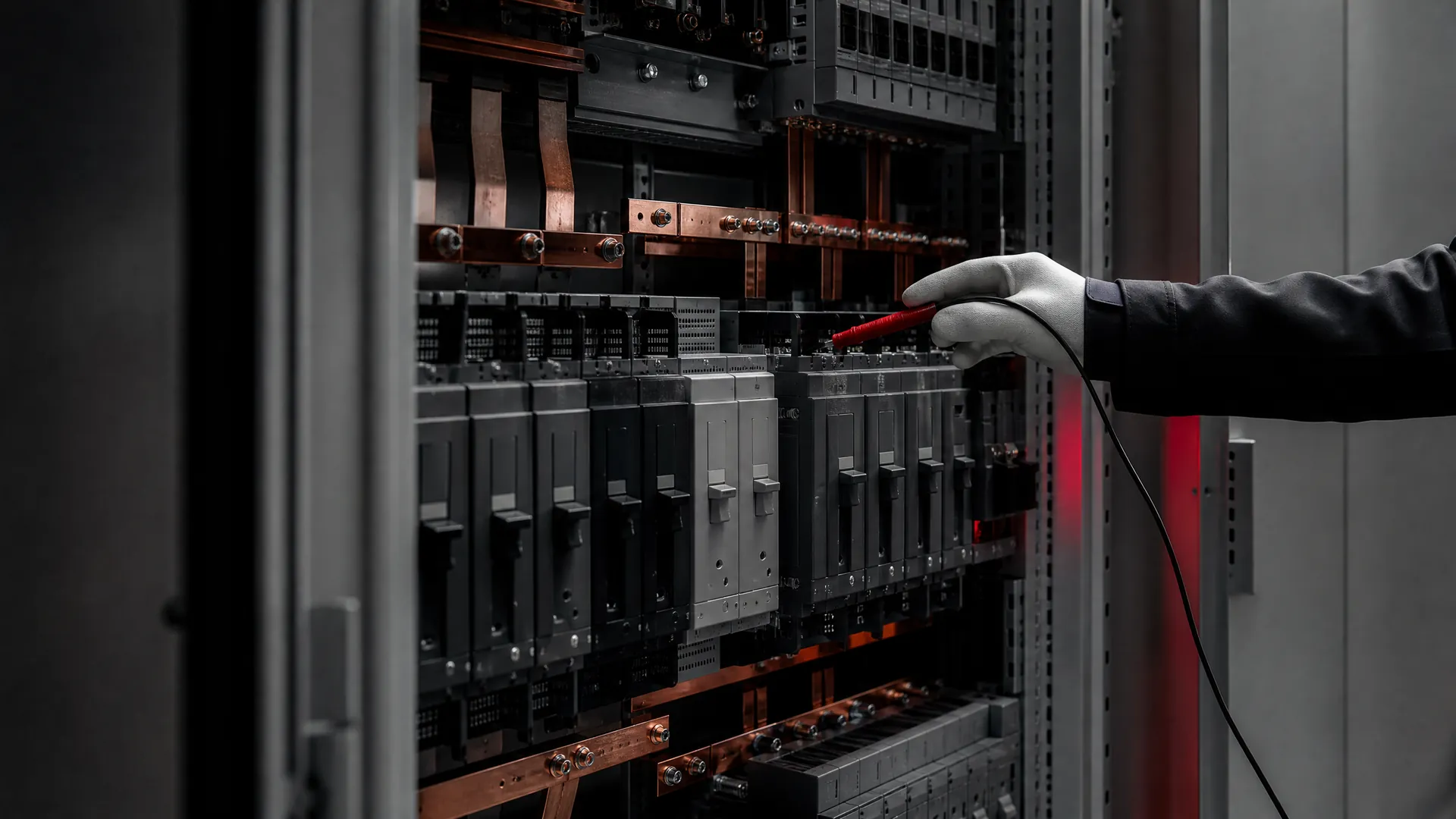
The main heat sources are the power losses of breakers and contactors, frequency drives, switched-mode power supplies, busbars and cables. Even if a drive turns only a small percentage of its power into heat, at higher ratings this can easily reach several hundred watts. Loss values should be taken from manufacturers' catalogues.
The basic approach is simple: internal losses are compared with the heat the enclosure surface can dissipate. This depends on effective surface area, material and the difference between internal and ambient temperature. As ambient temperature rises, that difference, and with it natural cooling capacity, shrinks. Whether the enclosure is free-standing, against a wall or in a row also changes the effective surface. IEC/TR 60890 offers a recognised calculation method, but results should be read conservatively, with a safety margin.
03 —Cooling options
With low losses, natural convection through louvred openings may suffice. For higher losses, filter fans draw air in at the bottom and exhaust it at the top. However, fans and natural ventilation can never bring the interior below ambient temperature.
Where the air is dusty, oily or aggressive, air-to-air heat exchangers transfer heat without mixing inside and outside air; this requires the interior to be warmer than ambient. If the interior must stay below ambient, the only option is an enclosure air conditioner.
04 —IP rating, dust and condensation
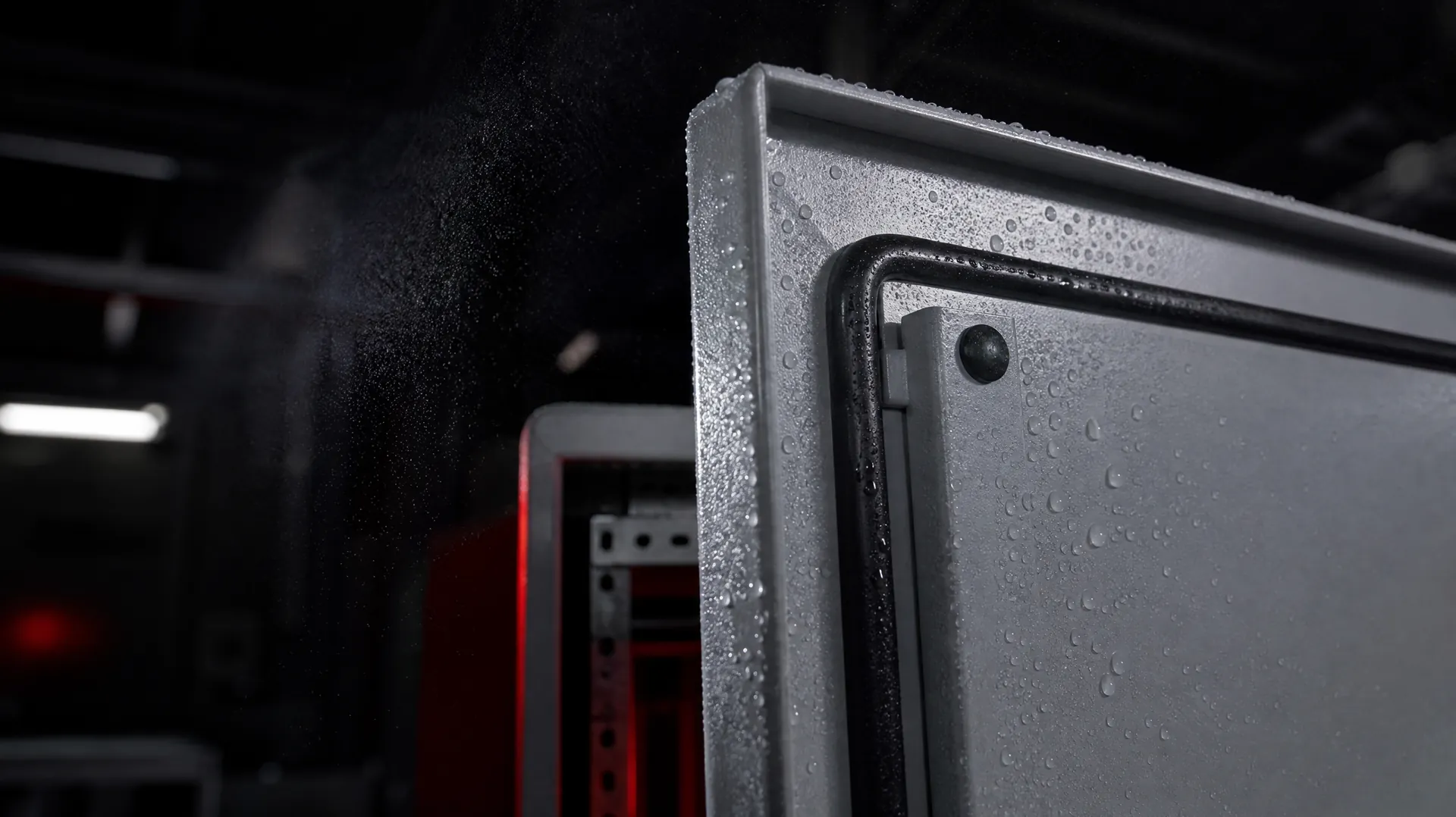
Every ventilation opening affects the IP rating. Filter fans retain some protection, but airflow drops quickly if filter maintenance is neglected. Closed-loop solutions reduce maintenance and preserve a high IP rating.
In cold, humid environments or on sites with large day-night temperature swings, condensation is a serious risk. Anti-condensation heaters controlled by a thermostat or hygrostat keep the interior above the dew point, preventing corrosion and leakage currents.
05 —Layout tips
Place heat-generating devices high in the enclosure and heat-sensitive electronics in the lower, cooler zone. Do not block airflow paths with cable ducts or mounting plates, and respect manufacturers' recommended clearances. Make sure fan and air conditioner outlets do not blow directly onto devices and that hot air is not drawn straight back in.
06 —Get it right at the design stage
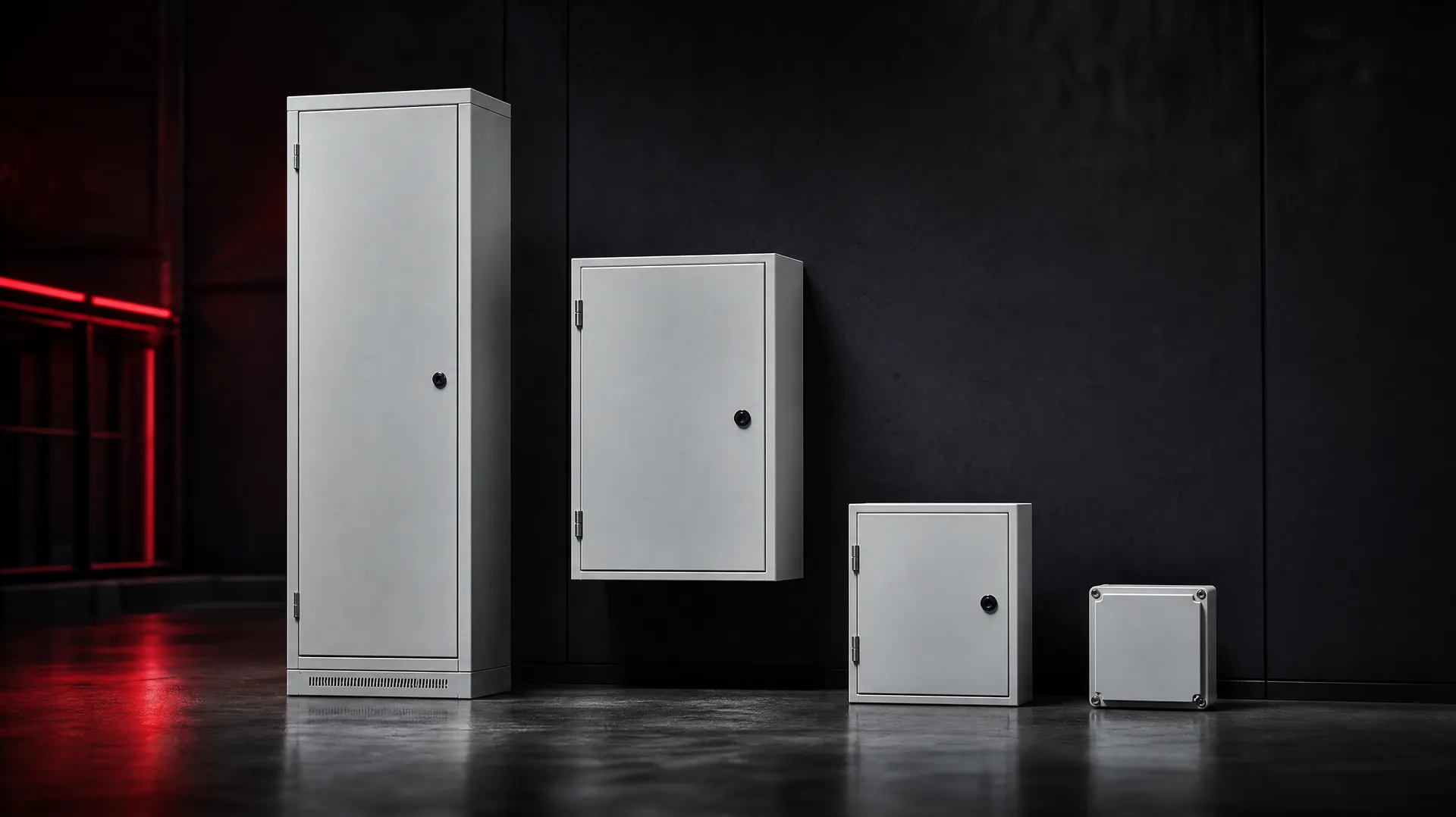
With more than 28 years of experience, Tuco Engineering builds project-specific floor-standing and wall-mounted panels, control panels and terminal boxes, with everything from design to production done in its own facility. With the browser-based 3D Panel Configurator on our website, you can design your enclosure body and request a quote.
End of article